
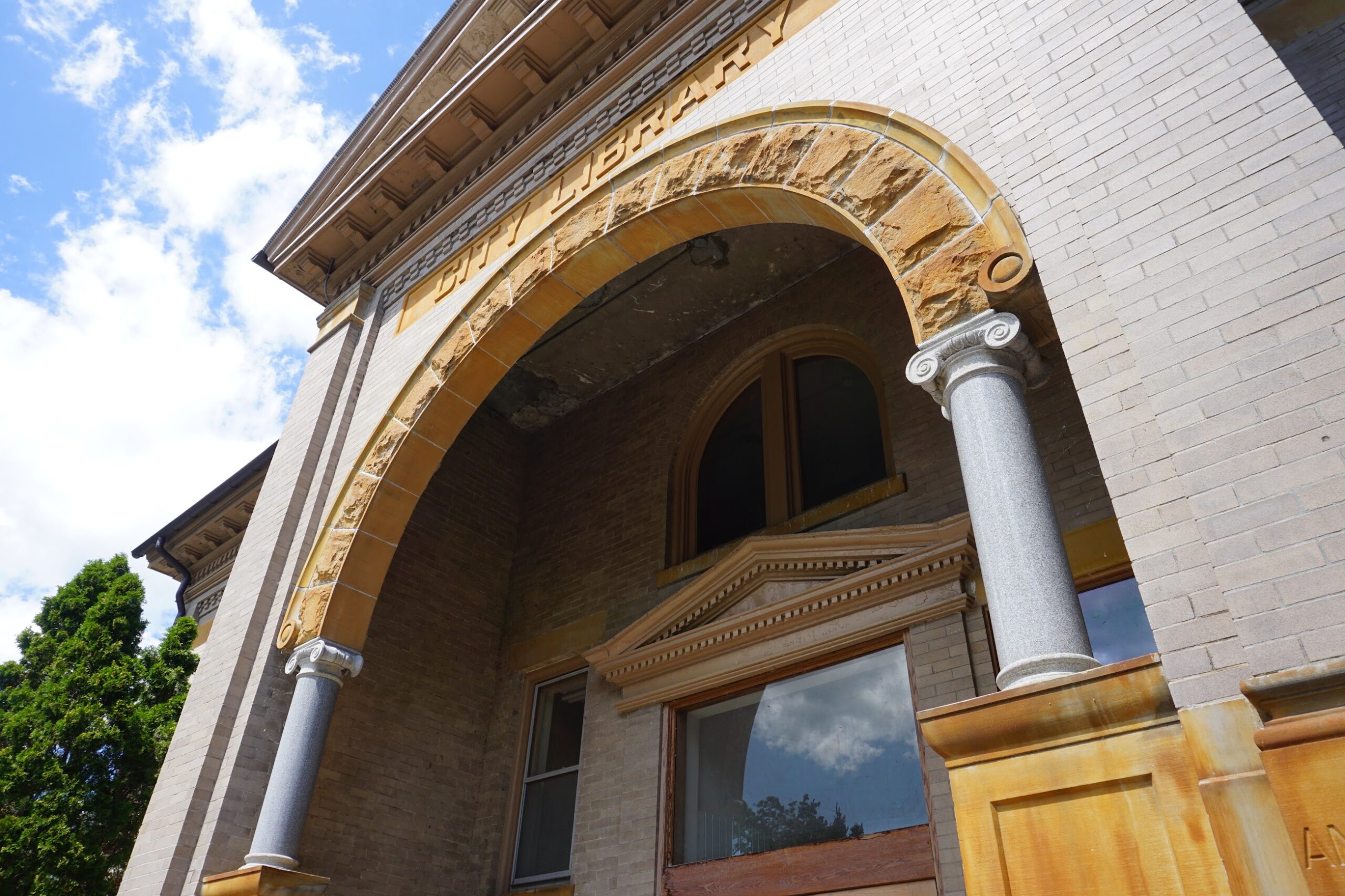
The Carnegie Library in Traverse City is one of the most beloved buildings in the area. Located on Sixth Street overlooking the Boardman River, the original structure is over a century old and feels like a unique part of Traverse City’s history. While it certainly is a part of our community’s social fabric, it’s actually one of hundreds of libraries built by the industrialist Andrew Carnegie.
Carnegie is a complex, controversial historical figure whose philanthropic charitable donations conflict with his checkered record on labor relations and wealth distribution.
Who Was Andrew Carnegie?
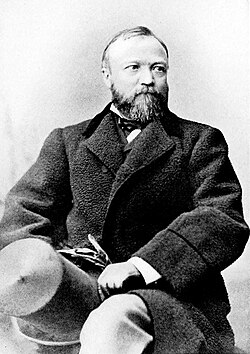
Born in Scotland, Carnegie immigrated to the US and worked in a cotton factory before eventually amassing a fortune in the steel and railroad industries. His rags-to-riches story is the stuff of legend, with historians crediting his incredible work ethic and obsessions with lowering operational costs to his success.
After building Carnegie Steel Company into an international behemoth, he would eventually sell it to J.P. Morgan for $480 million, an eye-watering sum that left him among the richest men in the world. In 1889, he published an essay on the moral imperative for the wealthy to improve society. “The Wealth Gospel” became his legacy, with Andrew Carnegie’s philanthropic contributions eventually surpassing $350 million – more than 90% of his total fortune.
The Carnegie Libraries
Late in life, the business of Andrew Carnegie was philanthropy, and he took to it with the same vigor and focus as steelmaking. Among other efforts, libraries were a priority.
The first Carnegie library was built in his birthplace, Dunfermline, Scotland, in 1881. Throughout his life and later through his foundation, Carnegie would help fund 2,509 public libraries worldwide, including 1,681 in the US. Every library came with two conditions.
- First, the city would have to agree to maintain the library, usually committing to a specific annual sum.
- Second, the city would have a committee select an ideal location for the library that would serve the community.
Why Libraries?
As a child, Carnegie’s family was too poor to buy books, but had access to the personal library of Colonel James Anderson, a retired businessman. Carnegie borrowed books from him every Saturday and credits access to Anderson’s library as a key factor in his education and success.
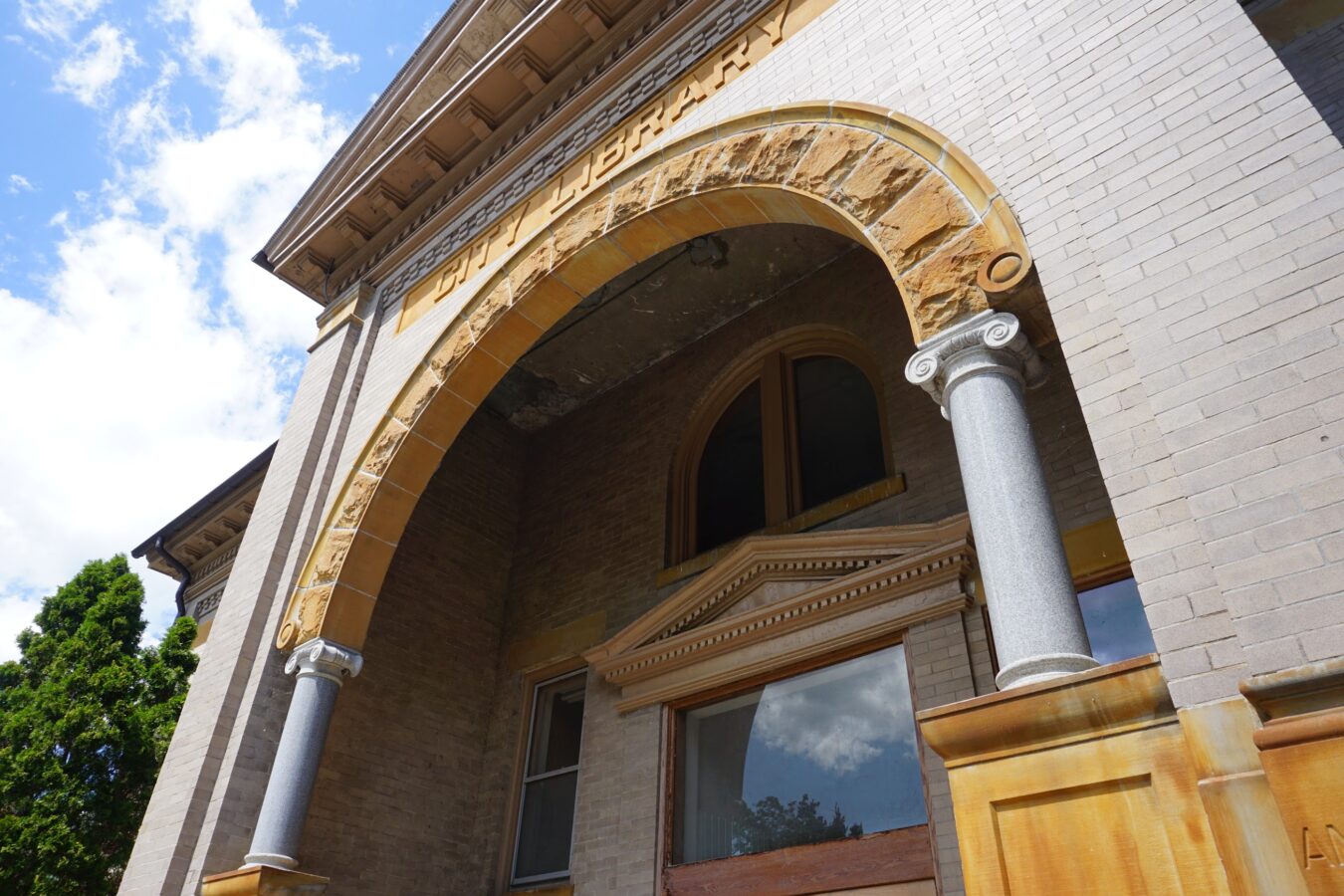
The Carnegie Library in Traverse City is now home to the Crooked Tree Arts Center. The original structure remains one of the most beautiful in the city.
Carnegie’s Checkered Past
For all his philanthropic endeavors, Carnegie’s legacy is complex, if not stained. Despite public, pro-labor sentiment in the press, Carnegie steelworkers were exposed to brutal factory conditions. His obsessions with efficiency led to long hours, poor safety standards, and a thoroughly anti-union stance. He claimed to support the right to unionize while simultaneously allowing his company manager, Henry Frick, to break the union at many of his plants.
The Homestead Strike
In 1892, workers at Carnegie Steel’s Homestead Plant went on strike to protect wages. When the sides couldn’t settle on a new contract, Carnegie (through Frick) locked out workers and put 300 union-busting Pinkerton agents on-site. A deadly fight broke out on July 6, and the union fell with it. The strike failed, union membership cratered, and the plant reopened at lower employment levels. Carnegie paid a price, too; his reputation as a labor supporter was ruined, making his claims of being a benevolent employer hollow.
Traverse City’s Carnegie Library
A decade later, Carnegie offered $20,000 to build a public library for the residents of Traverse City. The city agreed to set aside $2,000 annual for its maintenance and chose an ideal spot for its construction, high atop the sloping banks of the Boardman River.
Perry Hannah, a lumberman and widely considered one of the most influential people in Traverse City history, donated land on Sixth Street for the library, which was right across the street from his mansion. That riled up some locals, who maintained it was too close to Perry’s property. A second site was offered at the intersection of Cass and State Streets, located in the heart of downtown. Perry added more land to his offer – it would become Hannah Park, which still exists today, and the committee took it. The city council accepted, and the library opened in February 1905 with over 350 locals visiting.
The Tradition Continues
As the end of the century neared, the Traverse Area District Library had outgrown both the original Carnegie building and its subsequent addition. The library’s new home on Boardman Lake opened in January 1999, and the Carnegie location became the History Center of Traverse City before being occupied by Crooked Tree Arts Center.
The Traverse Regional History Center is a non-profit organization dedicated to preserving and sharing the rich stories of Northern Michigan. Through interactive storytelling and documentary films, TRHC relies on donations to do our work. Consider contributing to TRHC today.