
Centuries before northern Michigan became known for its lumber, cherries, and tourism, the Anishinaabek (or Anisihnaabe) tribes called the area home. Now known as one of the largest and most influential of the Great Lakes indigenous peoples, the Anishinaabe’s story is one of resilience, resistance, and revival. It’s impossible to overstate the importance of Anishinaabe culture and tradition to the region’s identity, and, thankfully, the tribe is enjoying a resurgence thanks to younger generations.
The History of the Anishinaabe
Today, the Anishinaabe is well known as a northern Michigan Indigenous tribe, but like other Native groups, it began on the East Coast. According to scholars and the tribes’ storytelling, the Anishinaabe began on the East Coast. Seven prophets instructed them to move west, following a whiteshell until they found a place where food grew upon the water.
It was a long process, and scholars believe the migration started between 600 AD and 950 AD. A large part of the tribe settled in Ontario, Minnesota, and Wisconsin, though many ventured further south into northern Michigan.
The Three Tribes: Ojibwe, Odawa, Potawatomi
The Anishinaabe are an alliance of three tribes, each given distinct responsibilities.
- The Ojibwe (Chippewa) are the Keepers of the Faith, ceremonies, and traditional knowledge.
- The Odawa (Ottawa) are the Keepers of Trade, and they established massive trail networks throughout Michigan and across the Upper Midwest.
- Potawatomi: The Keepers of the Fire; they oversee governance and the home.
These tribes lived throughout the Midwest, with the Ojibwe and Odawa typically based further north than the Potawatomi. Still, they remained in close, cohesive contact for centuries through trade, religious ceremony, and cultural development.
The French Fur Trade
For the Anishinaabe, contact with French fur traders in the 1600s was generally positive. It provided an excellent, productive outlet for their hunting skills, and settlers were few and far between. Nearly all contact between indigenous tribes and the French occurred at large trading outposts, and life generally went on as normal.
That changed when territorial conflicts between tribes and between the two dominant European powers in the region, France and Great Britain, damaged the fur trade and relations between colonial powers.
The Anishinaabe Hold Tough
The Anishinaabe clung to the homeland with incredible resilience. Through governmental, regional treaties and negotiations, the tribe largely kept its homeland, hunting and fishing rights, and its identity.
The tribe experienced demeaning assimilation pressure, including boarding schools, throughout the 1800s.
The Anishinaabe’s Cultural Resilience
After nearly a century of government pressure, the Anishinaabe entered the 20th century with their identity in tatters. Decades of federal efforts to smother indigenous language and culture had taken their toll, though there has been incredible investment in bringing this lost knowledge to light.
Throughout the 20th century, the Anishinaabe have campaigned against government restrictions and reverse assimilation programs in Canada and the US. The Indian Reorganization Act of 1934 ended many harmful policies and allowed tribes significantly more self-government. Canada, for its part, has admitted and apologized for its role in suppressing native identity. In 2024, it committed to giving more than $20 million (Canadian) to the Anishinabek Education System, empowering First Nation control over education and growing language and cultural awareness.
The Grand Traverse Band of Ottawa and Chippewa
The Anishinaabe were represented in northern Michigan by what today is the federally recognized Grand Traverse Band of Ottawa and Chippewa Indians. Headquartered in Peshawbestown, Michigan, just north of Traverse City, the Band is one of three Odawa tribes in Michigan. The other two are the Little River Band of Ottawa Indians and the Little Traverse Bay Bands of Odawa Indians.
The band had a long road to federal recognition. After initially applying in 1934 under the Indian Reorganization Act, they were denied twice: once in 1934 and again in 1943. They were only recognized in 1980, with the two other Michigan bands waiting another 14 years.
Read More: The History of the State Hospital in Traverse City
What Language Did the Anishinaabe Speak?
The Ottawa, Chippewa, and Potawatomi peoples spoke Algonquin, the prevailing indigenous language on the North American Atlantic coast. Over several centuries, their migration spread the Algonquin nation across Canada, Michigan, Wisconsin, and Minnesota.
Celebrating Anishinaabe Culture and Traditions
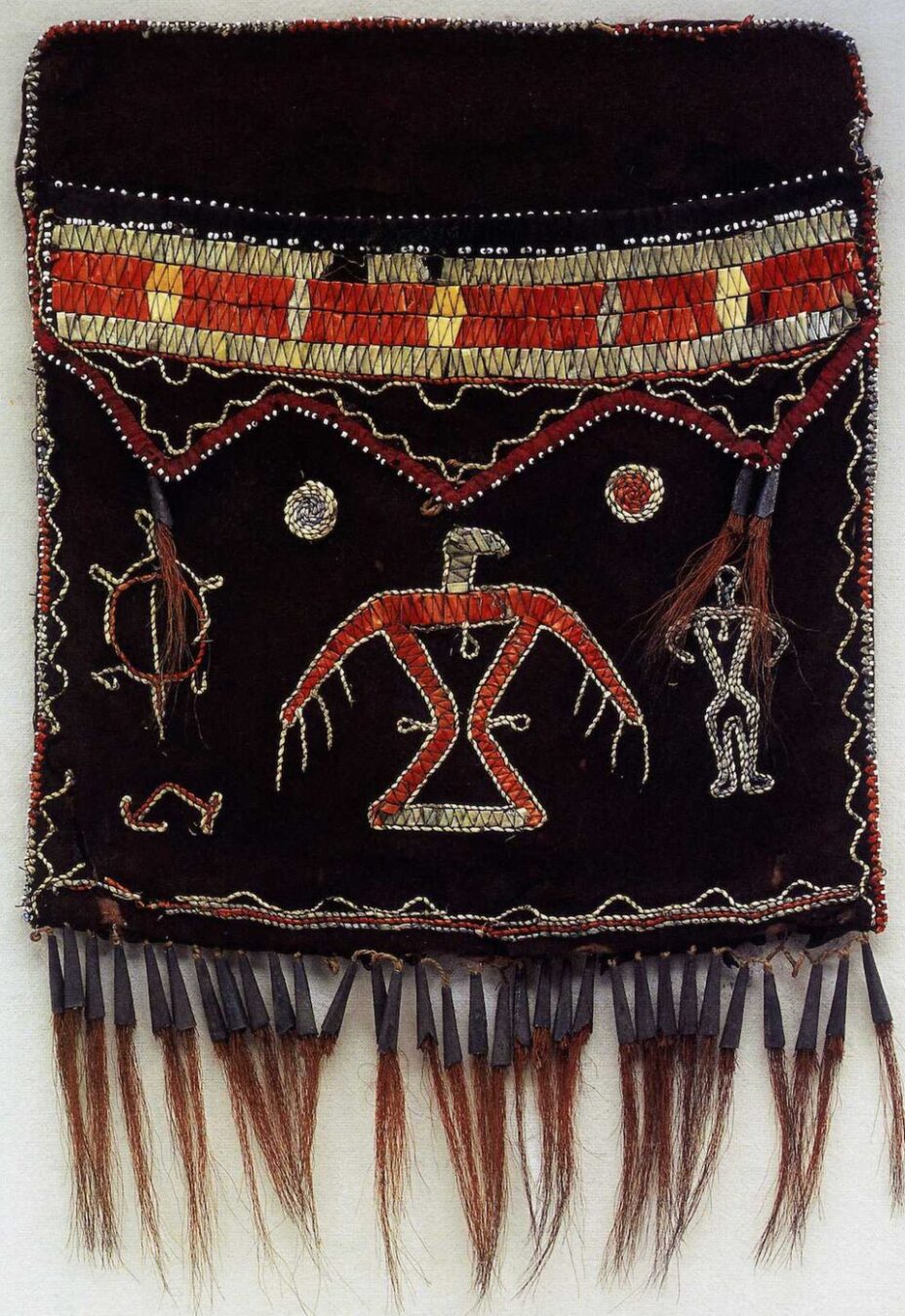
The Eyaawing Museum in Peshawbestown is the cultural and heritage center of the Grand Traverse Band of Ottawa and Chippewa Indians. Opened in 2009, it’s a must-stop for tourists and locals alike, offering educational programming plus tribal artwork, maps, and books. It’s the center of the tribes’ revitalization and has been crucial to keeping their language and culture alive.
Explore Traverse City’s Rich History
The Traverse Regional History Center is a digital-first resource for learning and expanding the history of northern Michigan. We are a nonprofit committed to storytelling, programming, and connection that strengthens the fabric of our community. Donate to Traverse Regional History Center and keep the story going for generations to come.